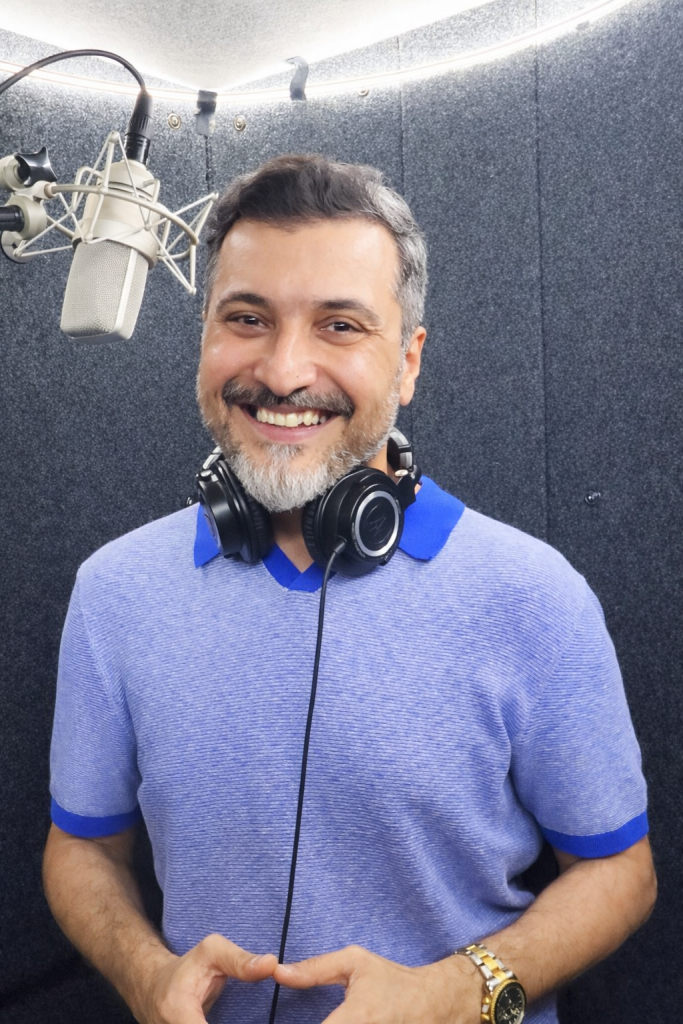
You’ve heard the voice countless times on television and radio, even if you didn’t know the name. Momin Durrani reveals the journey behind becoming one of Pakistan’s most prolific voice artists.
1.Your voice is instantly recognizable across Pakistani advertisements. When did you first realize your voice could become your career?
It wasn’t a sudden realization; it developed gradually over time. In the beginning, I simply had a deep interest in voice and sound. I spent a lot of time understanding how voice works, practicing different tones, and refining my delivery. At that stage, I didn’t imagine that my voice would eventually become part of Pakistan’s advertising industry. However, as I continued to work on my craft and gained more confidence, I began to see the potential of turning this passion into a profession. With consistent effort and dedication, I reached a point where I knew that one day my voice could represent brands and connect with audiences across the country.
2. Was voice-over always the plan, or did you “accidentally” land in this industry?
It wasn’t exactly accidental, but it also wasn’t something that was planned from the very beginning. Once I realized that voice-over was something I genuinely enjoyed, I started taking it seriously and invested time in developing my skills. Breaking into the advertising industry requires patience, discipline, and persistence, and I was determined to keep improving until I found my place. Over time, opportunities started opening up, and I gradually became part of projects that allowed my voice to reach a wider audience. Looking back, it has been a journey built on passion, hard work, and belief in my own potential.
3. What was your breakthrough commercial, the one that made advertising agencies start calling you regularly?
Have you heard the lines, “Surf Excel Hai Na!” and “Daagh to Achay Hotay Hain!” There was a particular campaign early in my career that changed everything. It wasn’t just a commercial — it was more like a brand film that required warmth, authority, and subtle persuasion in the same tone. When it aired, the response was immediate. Agencies began associating my voice with reliability and credibility.
4. How competitive is the voice-over market in cities like Karachi and Lahore? Is it relationship-driven or purely talent-based?
To be honest, the voice-over industry cannot survive on relationships alone. A voice artist may enter the field through contacts and referrals, but if the voice is not up to the mark, the artist will quickly be shown the door. Talent is essential to succeed in this industry. The audience connects with a voice when it resonates with their thoughts and emotions. Relationships may help with referrals, but performance and talent ultimately determine success.
5. What’s the biggest misconception brands and agencies have about voice-over artists in Pakistan?
The biggest misconception is when someone says, “Just read the lines!” to a voice-over artist. For us, it’s not just about reading a line and recording it. A voice can sound good, but without emotion, vocal intonation, pitch modulation, and proper inflection, it will not make an impact. A voice-over artist also needs to understand brand positioning, audience psychology, pacing, and even cultural sensitivities. Another misconception is that the job is easy. Behind every commercial there are multiple takes, emotional adjustments, and careful breathing control.
6. With AI voice tools emerging, do you see them as a threat to human voice artists locally?
AI is a tool. It can certainly help with certain tasks, but it cannot replace emotions and human experience. A human voice carries lived experiences — conviction, relief, happiness, humor, and even sadness. I don’t think AI can truly replicate that emotional depth. Some brands might use AI for cost efficiency, but they risk losing a genuine connection with their audience. Without that connection, brand recall also suffers.
7. What happens when someone hears you speak in real life and suddenly realizes, “Wait… I know this voice”?
Moments like these remind me how fortunate I am to be in a profession where my work leaves a lasting impression. It’s always heartwarming when someone suddenly pauses and says, “Oh — that voice is yours?” Sometimes they cannot place where they have heard me before, they just know the voice feels familiar. That familiarity is powerful. It means my voice has been part of their daily life in some way.
8. What advice would you give to those who want to become a voice-over artist?
I would urge young people to focus on their own voice and use it in the way that suits them best. Do not try to imitate other voice artists. Every creative professional needs to find their own path. My advice to aspiring voice artists is to listen carefully to advertisements, documentaries, and narrations. Observe how tone, pace, and emotion change depending on the message.
9. What is your message for the youth of Pakistan?
Don’t underestimate your unique abilities. Sometimes the very thing that makes you different is what makes you valuable. Discipline, humility, and consistency are what sustain a career. We live in a time where opportunities are wider than ever, but so are distractions. Stay focused and keep working on your craft.
Watch Momin Durrani’s iconic voice-overs here
KARVAN envisions showcasing the best and the brightest talent from Pakistan. If you have achieved an academic, personal, or professional milestone, or know someone who did, do send us a brief profile at [email protected].
Find us on Facebook: @talktokarvan